Why Vanilla Has So Many Forms
Why vanilla has so many forms comes down to extraction, texture and use: choose between extract, paste and pods with a clearer sense of what each adds.
The common mistake with vanilla is treating every form as a drop-in substitute; the cost is a cake that tastes too faint, a custard dotted with material you did not expect, or an expensive pod used where its texture and appearance cannot matter. Why vanilla has so many forms becomes clearer when you separate the flavour from the way it is carried into a dish.
What is actually in a vanilla pod?
A vanilla pod is the fruit of an orchid. Inside its dark, pliable casing are tiny seeds, while the pod wall and seeds together hold aromatic compounds that give vanilla its recognisable, layered scent. The familiar flavour does not come from seeds alone.
After harvest, pods are cured and dried, a process that develops their aroma and turns them dark. Their character varies with growing conditions, curing and storage. A supple pod with a noticeable fragrance offers more to cooking than a brittle one that has lost much of its scent.
The pod is therefore both an ingredient and a source material. It can be split and scraped to release seeds, steeped to flavour liquid, or processed into products designed to make vanilla easier to measure and distribute.
How do extract, paste and pods differ?
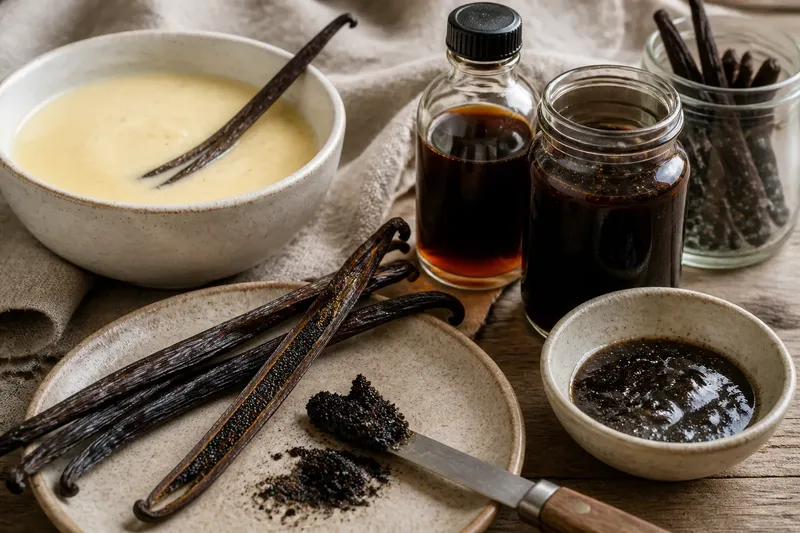
Vanilla extract is a liquid flavouring made by extracting vanilla compounds into a solvent, commonly alcohol and water. It pours easily into batters and mixtures, disperses without adding visible seeds, and suits recipes where a smooth appearance matters. Its aroma can fade with prolonged heat, so some cooks add a little towards the end when the recipe allows.
Vanilla paste is a thicker preparation that commonly combines extract with vanilla seeds and a sweet or thickening ingredient. It offers a convenient way to add visible flecks and a concentrated vanilla note without scraping a pod. Formulations differ, so paste may affect sweetness or texture slightly; check its ingredient list if those details matter to the recipe.
Whole pods bring the pod wall, seeds and a hands-on method of flavouring. Scrape the seeds into cream, custard or cake mixture for visible specks, then steep the emptied pod in a warm liquid to draw out more aroma. Pods suit recipes where their appearance or gentle infusion is part of the result, but they take more preparation and may be costly to use casually.
These forms are not interchangeable simply because each tastes of vanilla. Extract is fluid and easy to blend; paste adds texture and specks; a pod contributes seeds and a casing that can infuse. The same amount by volume will not necessarily deliver the same intensity or effect.
Which form suits the dish?
Start with what the recipe needs beyond flavour. For a pale buttercream, ice cream or custard where black flecks are welcome, paste or scraped seeds make that detail visible. For a smooth pudding, extract gives a more even appearance. In a baked batter, extract is often convenient because it mixes quickly; paste can work too, provided its extra ingredients suit the recipe.
For a liquid that will be warmed, such as milk for rice pudding, a split pod can steep while the liquid heats. Remove the pod before serving, or rinse and dry it for another suitable use, such as scenting sugar. A pod’s aroma is easier to appreciate in a recipe with a relatively simple flavour profile than in a heavily spiced mixture.
Imagine you are making a small bowl of custard for fruit. If you want a smooth, uninterrupted surface, choose extract and stir it in as directed. If the dark flecks are part of the appeal, use paste or scrape a pod into the cream; the visible seeds then signal vanilla without changing the custard’s basic purpose.
Can vanilla forms be swapped, stored or reused?
Can vanilla extract replace a whole pod?
Often, but the conversion depends on the recipe and the strength of the extract. Use the recipe’s stated substitution if it provides one; otherwise, add a modest amount, taste where safe and practical, and remember that extract will not supply visible seeds or an infusing pod wall.
Does vanilla paste taste stronger than extract?
Not automatically. Paste varies by maker and may contain different proportions of vanilla, sweetener and thickener, so its flavour and texture are not uniform. Read the label and follow the product’s suggested use rather than assuming a spoonful matches the same volume of extract.
How should vanilla pods be stored?
Keep pods in a tightly closed container, away from strong light and heat, so they are less exposed to drying and surrounding odours. If a pod feels brittle or has little aroma, its flavour may be muted; avoid confusing harmless natural surface crystals with mould, which can look fuzzy or damp.
Can a scraped pod be used again?
Yes, if it is clean and still fragrant: steep it in another suitable liquid or let it scent sugar in a closed jar. Its flavour will weaken with use, so judge by aroma rather than expecting every reuse to contribute equally.
Vanilla extract is generally straightforward to keep sealed in a cupboard, while paste and pods need storage suited to their ingredients and packaging. Follow the label and the maker’s directions where they differ. There is little point in fussing over elaborate homemade storage rituals: a clean, closed container and attention to the product guidance are more useful.
What should the ingredient list tell you?
The front label may call a product “vanilla”, but the ingredient list explains what form you are buying. Look for whether it is extract, paste or a vanilla-flavoured preparation, and notice added sugar, syrup, thickener or other flavourings. Those additions can matter in a delicate recipe, particularly if you are adjusting sweetness or aiming for a particular texture.
Vanilla flavour can also come from sources other than whole pods, and products vary in how they describe those sources. If origin or ingredients matter to your choice, read the full label rather than relying on a picture of a pod or a prominent phrase on the front. For a recipe, the practical question remains: will this product contribute the flavour, appearance and consistency you want?
Understanding why vanilla has so many forms makes choosing less about finding a single “best” option and more about matching the carrier to the dish. Reach for extract when easy blending and a smooth look matter, paste when flecks are welcome, and whole pods when steeping and the pod’s fuller presence justify the extra handling.