The “Natural” Label Is Not a Flavour Description
A natural food label does not tell you how a product tastes. Learn how to use ingredient lists, flavour wording and process details to choose with clearer expectations.
The common mistake with a natural food label is to treat it as a tasting note. The word may suggest something fresh or simple, but it cannot tell you whether a soup is tart, smoky or mild, or explain how its ingredients were processed.
What does a natural food label say about flavour?
On its own, very little. “Natural” is an impression-making word, not a flavour description like “lemon”, “roasted” or “peppery”. It does not tell you how strong a taste will be, which ingredient contributes it, or how it sits alongside salt, sweetness and acidity.
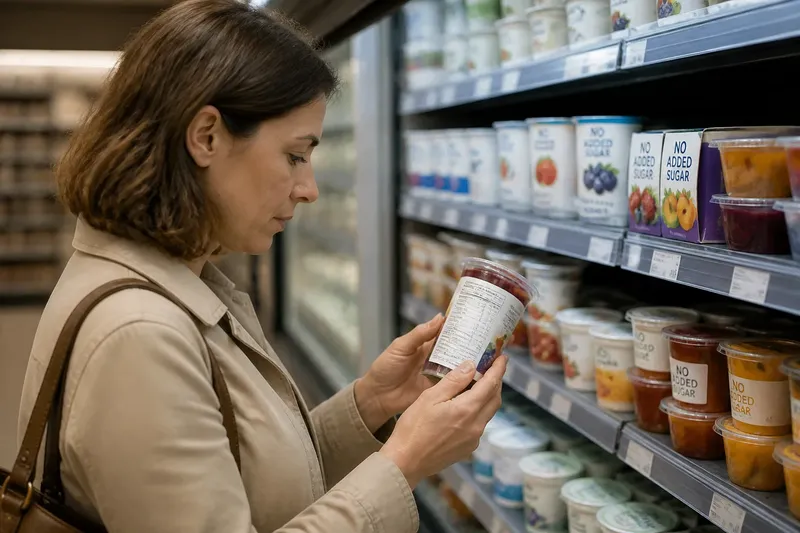
Two products carrying the same word might taste quite different. A strawberry yoghurt could be sharp and tangy, gently sweet or rich and creamy; the front-label claim does not distinguish among those possibilities. The ingredient list and any clear flavour description offer more useful clues, though neither can reproduce tasting the food.
Packaging may invite you to imagine ripe fruit or herbs just picked from a pot. That picture is not evidence of what is in the pack. Treat it as a prompt to check the product description and ingredients, not as a tasting note.
Does a natural food label mean the food was not processed?
The word alone does not explain what happened between raw ingredients and the sealed pack. Food may be chopped, dried, milled, heated, fermented or blended; the front-label wording does not provide a process history.
Take a jar of tomato sauce: its tomatoes may have been cooked and blended with other ingredients. The word “natural” cannot tell you whether they were roasted, how smooth the sauce is, or which seasonings shape its flavour.
It also does not specify that a food is unaltered, minimally processed or made by a particular method. If a process matters to your choice, look for a specific description such as “fermented” or “cold-smoked”, and check the rest of the packaging for context. A process word is not a flavour verdict either: “dried” describes a format, not whether the result tastes sweet or savoury.
Which label details offer clearer flavour clues?
Start with the product name and explicit flavour wording. “Lemon and herb dressing” gives a clearer flavour direction than “natural dressing”. The ingredient list can add context, but neither tells you exactly how prominent each flavour will be.
Read the full ingredient list and its order, rather than stopping at the first familiar word. A named fruit, spice or herb may sit alongside ingredients that contribute sweetness, sourness, saltiness or richness. Texture and intended use matter too: a thick dip meets bread differently from a thin dressing over salad.
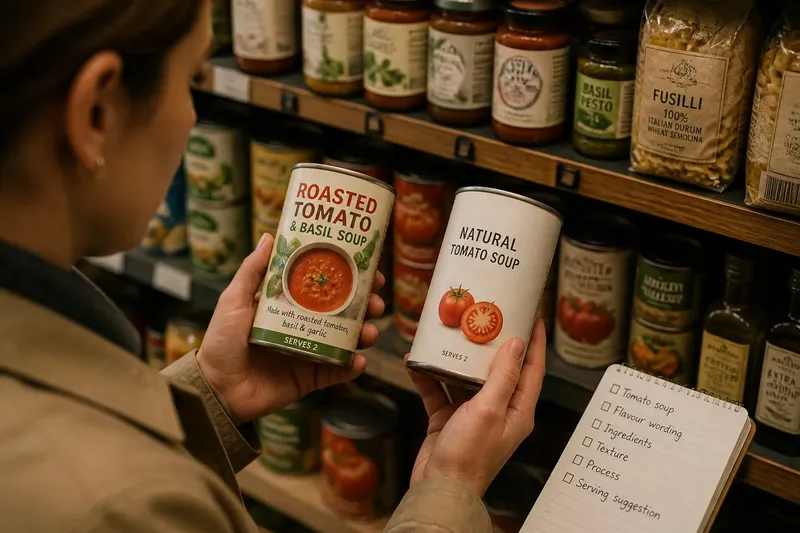
Say you are choosing between two tomato soups. For this invented comparison, the first product description names roasted tomatoes and basil, while the second says only “natural”. Reading the first description and checking both ingredient lists gives you a more specific flavour direction to consider; the likely trade-off is clearer wording for one option versus less information for the other. Neither label settles the exact sweetness or acidity, so your choice remains a judgement based on the clues available.
A serving suggestion is a prompt, not proof of what is in the product. A bowl pictured with fresh herbs may show how the maker suggests serving the soup. Check the ingredient list before assuming those herbs are already in the recipe.
Why do pictures and rustic wording shape expectations?
Fields, wooden boards, fruit and handwritten-style lettering can make a product feel close to a home kitchen or farm stall. Those design choices set a mood; they do not identify an ingredient’s source or a cooking method. A drawn apple is not an ingredient statement.
Words such as “pure”, “wholesome” or “simple” can also invite an impression without naming a sensory detail. Ask what the wording actually specifies. If it does not name a flavour, ingredient, texture or process, it cannot answer a question about those things.
An attractive package is not necessarily misleading; packaging design and product information simply serve different purposes. Use the front to find a product that interests you, then check the product name and ingredient details to see what the wording supports.
How should you read “natural flavour” on an ingredient list?
“Natural flavour” is an ingredient-list term, not a promise that the whole food tastes like an unprocessed version of a particular plant. The phrase indicates flavouring in the product, but it does not tell you how intense that flavour is or how closely it resembles the food you have in mind.
Do not confuse the term with a claim that the complete product is natural. The ingredient list can include components with different roles, and “natural flavour” does not describe the product’s overall sweetness, saltiness, texture or processing. If you need to know whether a particular ingredient is suitable for you, check the full label and ask the manufacturer or a qualified professional when the answer matters.
What can the word natural tell you?
Does natural mean the product tastes fresh?
No. The word does not define freshness or say when an ingredient was harvested. Look for a specific sensory description or ingredient detail instead.
Does natural mean the food contains no additives?
Not from that word alone. Read the ingredient list for the details relevant to your choice.
Can natural tell you where ingredients came from?
No. The word does not identify a farm, region or country of origin. Look for an explicit origin statement if provenance matters to you.
Does natural mean the flavour comes from the named food?
Not necessarily. A front-of-pack image or flavour name does not by itself explain the source of the flavouring. Check the ingredient wording for the information the maker provides.
What is not worth the effort?
It is not useful to decode a rustic illustration, green colour scheme or leaf motif as if each were a technical description. Nor does comparing the word “natural” across packets tell you which product you will prefer. Those details may help you recognise a brand or style, but they cannot replace a flavour description or ingredient list.
You need not treat the word as either a mark of virtue or a warning sign. It simply does not answer enough of the questions a flavour-minded shopper might ask. Keep your attention on named ingredients, explicit flavour terms, texture descriptions and any stated process relevant to your choice.
How can you make a more grounded flavour choice?
Separate the impression from the information. Ask what the product is called, which ingredients are named, what flavour or texture the maker describes, and whether a process or origin is stated plainly. Each answer helps narrow your guess without pretending to predict every bite.
If flavour is your main concern, compare like with like: two soups, two dressings or two fruit yoghurts, rather than judging unrelated products by the same front-of-pack word. A clear description may help you choose between them, while the ingredients show what else could shape the taste. A natural food label can remain part of the package’s language without carrying the flavour decision.
Before putting a product in your basket, name the flavour you expect and check whether the description and ingredients support that expectation. If they do not, revise your guess instead of filling the gap with packaging imagery. That habit keeps your expectations tied to what the label actually says.