Fresh, Frozen or Tinned Peas for a Weeknight Dish?
Fresh, frozen or tinned peas suit different weeknight dishes. Match their texture, preparation and moisture to the meal for a simpler, better-balanced supper.
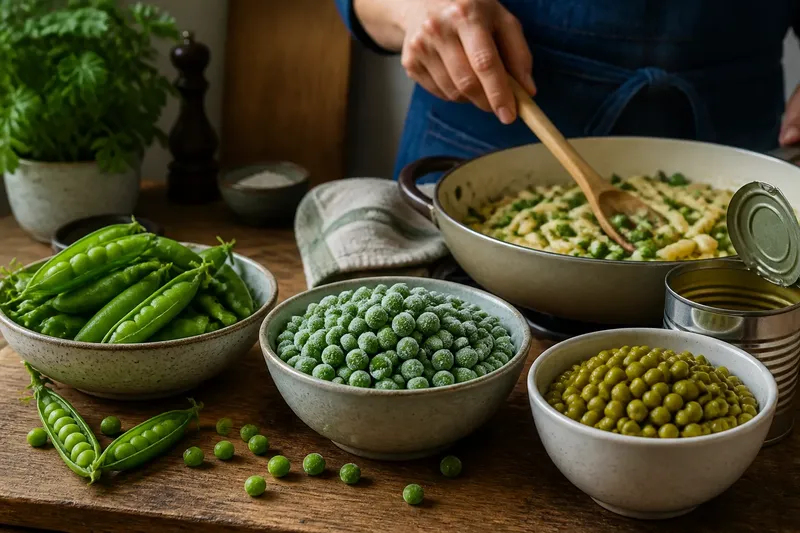
The common mistake with fresh, frozen or tinned peas is treating “fresh” as the automatic winner. That can mean extra shelling for a dish where the peas are barely noticed, or a soft texture where you wanted a distinct, sweet pop. Choose by the job the peas need to do, and dinner gets simpler.
What should peas do in this dish?
Start with the finished plate, not the vegetable aisle. Do you want bright green beads that hold their shape, a soft ingredient that blends into a sauce, or something ready to stir in while the rest of the meal cooks?
Frozen peas are often the easiest fit when the dish needs recognisable, separate peas with little preparation. Tinned peas are already soft and can bring a gentler texture. Fresh peas have a short, focused season in many shops and need shelling, but their clean bite can suit a dish built around them.
These are tendencies, not rules: pea variety, packing liquid, cooking method and time all affect the result. The useful question is what texture the recipe can accommodate.
When do frozen peas earn their place?
Frozen peas are a convenient choice for quick cooking because they are shelled and ready to use. A handful can go into a pot of rice near the end, or into a pan of pasta sauce for a brief warm-through. Their loose, separate form makes it easy to take only what you need and return the rest to the freezer.
For a crisp-tender result, avoid treating them like a vegetable that needs a long simmer. Add them late enough that they warm through without spending ages in the pan. If a dish contains plenty of liquid, such as soup or a loose curry, add them towards the end so they keep more definition.
Imagine you are making a quick lemon-and-herb pasta and want green flecks that remain whole. Add frozen peas to the cooking pasta water shortly before draining, then toss them with the sauce; the expected result is warm, distinct peas without a separate pan. If the sauce is delicate, keep the cooking brief so the peas do not soften more than you intended.
When are tinned peas the better fit?
Tinned peas are ready to use, which can help when the meal needs a soft, mellow ingredient rather than a firm green accent. Drain them before adding to a pie filling, warm salad or thick stew, especially if excess packing liquid would loosen the dish.
They can lose their shape if stirred hard or heated for too long. Fold them in near the end, and use a gentle hand. In a blended soup, that softness may be useful; in a dish where each pea should remain distinct, it may not be.
Check the tin for the ingredient list and any added salt, then season the whole dish with that in mind. The label and manufacturer’s directions are the right guide for storage and handling once opened.
What do fresh peas bring to the plate?
Fresh peas can offer a lively, firm bite when they are recently harvested and cooked briefly. Their appeal is strongest when peas are central rather than a last-minute addition to a crowded sauce: try them with butter and mint, or alongside a simple grain and soft cheese.
The trade-off is preparation. Pods need shelling, and the edible yield is less obvious until you open them. Fresh peas also vary: taste one raw if appropriate and safe for you, or cook a small amount briefly and judge the texture before building the dish around them.
There is no need to shell a large bowl of peas just to decorate a meal with a small green garnish. That effort is better saved for a dish where their fresh texture is a defining feature.
How do the formats behave in common weeknight dishes?
- Soup: Frozen peas suit a quick, bright soup; tinned peas can work in a softer, blended one. Add either near the end if you want a fresh green flavour rather than a long-cooked, muted one.
- Fried rice: Frozen peas are easy to scatter through the pan and can stay distinct. Drain tinned peas well and fold them in gently, since vigorous frying may break them up.
- Pie or casserole: Tinned peas can sit comfortably in a soft filling, while frozen peas offer more shape. Fresh peas make sense when you want their bite to stand out.
- Salad: Fresh or briefly warmed frozen peas can give a firmer texture. Tinned peas may suit a softer salad, but drain them thoroughly so the dressing does not become watery.
These are starting points, not fixed pairings. If a recipe gives a specific cooking time or calls for a particular texture, follow that cue and adjust the pea format around it.
Which pea format suits your question?
Can frozen peas go straight into a pan?
Often, yes: add them directly to a simmering sauce or hot pan and allow time for them to warm through. If they release more moisture than the dish can take, give the sauce a little longer to reduce before serving.
Should tinned peas be rinsed?
Drain them, then decide whether to rinse based on the dish and the taste of the packing liquid. Rinsing can remove some surface liquid and salt, but it is not essential for every recipe.
Do fresh peas need less cooking?
They usually need only brief cooking to retain a lively bite, though size and maturity matter. Taste as you go rather than relying on a universal timer.
Can I swap one format for another?
Usually, but adjust for texture and moisture: add frozen peas late, handle tinned peas gently, and allow for the work of shelling fresh ones. In a smooth soup or a long-cooked filling, the differences may matter less than in a salad or quick pan dish.
What is the simplest way to decide?
For a weeknight dish, choose frozen peas when you want quick, separate peas; tinned peas when softness and immediate readiness suit the meal; and fresh peas when their bite deserves centre stage. Think about when they enter the cooking, too: late additions tend to preserve more shape, while longer cooking softens any format.
When comparing fresh, frozen or tinned peas, the best choice is the one that fits the dish’s texture and your available time—not a blanket rule about freshness. A small adjustment, such as draining well or adding the peas near the end, often matters more than the format alone.