A Pantry Shelf for the Dinner You Actually Make
Build a pantry around familiar dinners, so each staple earns its space, suits your cooking habits and helps turn ordinary ingredients into a meal.
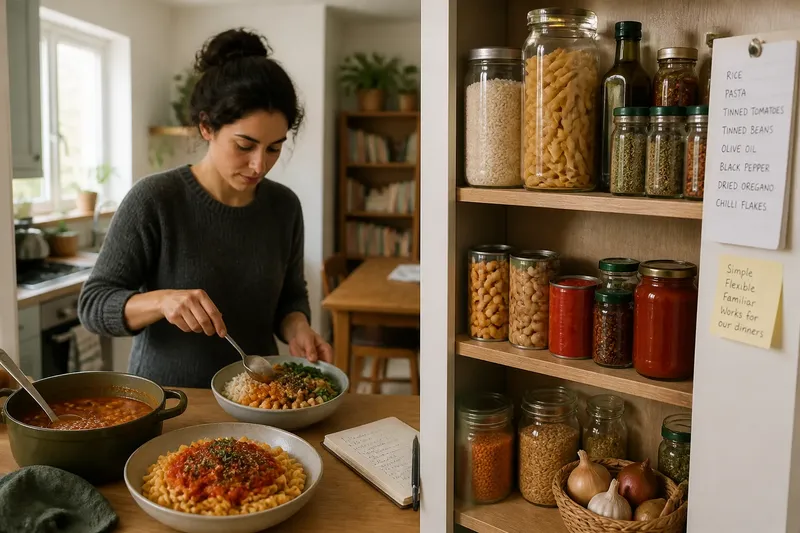
The common pantry mistake is buying for the cook you hope to become: jars of unfamiliar grains, several specialist sauces and a spice used in one ambitious recipe. A pantry shelf for dinners you actually make starts with the meals already appearing on your table, so useful ingredients stay in rotation instead of becoming clutter.
Imagine that Maya cooks after work and regularly makes tomato pasta, bean-and-vegetable soup and rice bowls with eggs or leftover vegetables. She has a crowded cupboard but still runs short of the ingredients that turn those dinners into something complete. Her task is not to devise an impressive stock-up list; it is to identify a small set of ingredients that connects her familiar meals.
Which dinners deserve a place in the plan?
Maya begins by looking back at an ordinary stretch of meals, not by choosing recipes from a cookbook. She writes down the dinners she has made more than once without special effort, including meals built from leftovers and the quick versions she reaches for when she is tired.
That distinction matters. A meal may sound appealing but still demand fresh herbs, an unusual condiment and a long preparation window that rarely fits the week. Familiar dinners reveal what the household actually uses, including the shortcuts and substitutions that make them workable.
For each dinner, Maya notes the ingredient that gives it structure and the pantry item that helps it come together. Pasta needs pasta and a sauce base; soup can use beans, stock or tinned tomatoes; rice bowls need rice and a flavouring that suits whatever vegetables are available.
She also marks ingredients that are not truly pantry staples. The eggs and vegetables in her rice bowls matter to the dish, but they are bought fresh or used from leftovers. Keeping those separate prevents the shelf plan from pretending that stored goods can replace every fresh component.
How does a pantry shelf for dinners you actually make take shape?
Next, Maya lays the three dinners side by side and looks for ingredients that serve more than one of them. The aim is not to make every meal taste the same; it is to find a few flexible building blocks that can take different roles.
Her overlap is clear: rice, pasta, tinned beans, tinned tomatoes, olive oil and a small selection of seasonings. Rice supports bowls and can accompany soup; tomatoes work in pasta sauce and soup; beans can enrich soup or top a rice bowl. Oil and seasonings help shape the result without requiring a separate jar for every recipe.
She chooses one form of each ingredient that matches her cooking. A tin of beans suits a quick dinner better than a bag of dried beans that needs advance soaking and longer cooking. Dried pasta and rice are easy to keep on hand, while tinned tomatoes provide a ready sauce base.
For flavour, Maya picks seasonings that fit the meals she already enjoys. Black pepper, dried oregano and chilli flakes are enough to give her tomato dishes different directions. She leaves out a speciality spice blend she bought for a recipe she has not repeated; it may be delicious, but it has not earned shelf space in this plan.
The result is deliberately modest. Each item has a reason to be there, and the shelf remains open to a new ingredient if a genuinely new habit takes hold. A pantry is a working collection, not a test of culinary ambition.
What should each staple earn its place by doing?
Maya gives each candidate a practical job rather than judging it by how versatile its packaging claims it is. A useful staple might shorten preparation, supply the main body of a meal, add flavour or help a dish stretch when fresh ingredients are sparse.
- Meal connection: Which familiar dinner uses it, and can you name another one that could use it too?
- Effort fit: Does its preparation suit the time and attention you usually have on a weekday?
- Format fit: Is tinned, dried, jarred or bottled the form you are likely to use before opening another?
- Flavour fit: Does its taste work with the meals you actually enjoy, rather than only with a recipe you might make?
- Storage fit: Is there a sensible place for it where you can see and reach it?
- Repeat use: Have you used the same item in recent meals, or does it keep being passed over?
These questions help Maya compare two plausible options without turning the decision into a universal rule. For instance, a jarred sauce may be more convenient than tinned tomatoes if she prefers its flavour and uses it regularly. If she likes adjusting garlic, herbs and seasoning herself, the simpler tomato base may suit her better.
Labels can help identify ingredients, storage advice and any preparation directions relevant to the product. Where a choice depends on the label, manufacturer instructions or local rules, follow those rather than assuming every product behaves the same way.
What happens when the shelf meets a real dinner?
Say Maya comes home with cooked rice left from another meal, a carrot and a handful of greens. She warms a little oil in a pan, adds the vegetables, then stirs in rice and a spoonful of beans; black pepper and chilli flakes provide the finish. The expected result is a filling rice bowl assembled from familiar pantry items and whatever fresh food is already available.
On another evening, the same shelf supports tomato pasta. Maya warms tinned tomatoes with oregano and pepper, then serves the sauce with pasta. If she wants soup instead, beans and tomatoes can join a pot with vegetables and liquid she already keeps for cooking.
The shelf does not dictate a menu. It gives Maya a few ingredients that can support more than one familiar dinner, while leaving room for fresh produce, leftovers and personal taste. That flexibility is more useful than a cupboard full of ingredients tied to single recipes she may never repeat.
Which choices make the shelf harder to use?
One trap is buying several versions of an ingredient before learning which format fits the household. Maya does not need dried, tinned and ready-to-eat beans at once. She can choose the form that suits her routine, then reconsider only if her cooking habits change.
Another is treating “versatile” as a synonym for “worth buying”. An ingredient might work in many recipes on paper yet still clash with the flavours Maya likes or require more preparation than she wants. The useful question is whether it has a real job in meals she makes, not whether it could feature in a long list of possibilities.
It is also easy to buy in bulk because a cupboard feels like security. Maya instead keeps an eye on what is already open and buys replacements as her normal shopping routine allows. That keeps duplicates from hiding at the back and makes it easier to notice which ingredients are genuinely moving through the kitchen.
Not worth the effort: building a colour-coded inventory or assigning every jar a formal score. If a short written list and a glance at the shelf are enough to guide the next shop, adding administrative work will not make dinner more appealing.
What should change as your meals change?
A pantry plan is not a permanent contract. If Maya starts making lentil soup often, lentils may earn a place; if a particular sauce remains untouched through several ordinary shopping cycles, she can stop replacing it. The decision follows repeated use, not guilt over what she has already bought.
Different households will reach different choices. Someone who cooks for one may prefer smaller packages or ready-to-use formats; someone who regularly cooks larger shared meals may reach for larger quantities. Allergies, dietary needs, storage space and preferred flavours also shape what makes sense, so the same short list will not suit everyone.
The most useful pantry shelf for dinners you actually make is one you can explain at a glance: these ingredients support these meals, in forms I will use. Maya’s finished shelf is not a miniature food shop or an aspirational menu. It is a compact set of familiar building blocks, chosen because they make her regular dinners easier to put together.